I wanted a pollinator friendly yard.
There was never really a grand plan to stop mowing the grass.
There was no carefully drawn landscape design. No five-year habitat restoration plan. No dramatic morning where I walked outside, raised my fist toward the sky, and declared war on turf grass.
I just started paying attention.
And once I did, mowing everything down every week started to feel a little strange.
It started with the fireflies
One of my favorite things about summer here is the fireflies.
At dusk, they start appearing along the edges of the woods and across the yard until eventually the whole place is blinking. It is exactly the sort of tiny magic I want more of.
Then I learned something that made me look at the yard differently.
Fireflies spend most of their lives nowhere near the sky.
Their larvae live at or near ground level, where leaf litter, moisture, taller vegetation, and undisturbed areas provide habitat. Mowers and constant ground disturbance can be a problem for exactly the creatures I was standing outside every summer hoping to see more of.
Which presented the ultimate question:
Why was I mowing their house down?
So I stopped.
Not everywhere. We still have areas that function as actual lawn. The dogs need somewhere to run, we need paths to walk, and I have not completely abandoned civilization.
Yet.
But other parts of the property?
I started leaving them alone.
And then things started showing up..
This is the part I wasn’t expecting.
When you stop insisting that every inch of a property look controlled, you start noticing how much is already happening there.
Plants I hadn’t planted appeared.
Wildflowers bloomed.
Bees found them.
Butterflies followed.
The edges became taller and softer. Birds started spending more time there. Insects that I probably would never have noticed before suddenly became part of my daily rounds through the garden.
Some of what appeared was wonderful.
Some of it was invasive and absolutely did not receive diplomatic immunity simply because I had decided to become emotionally attached to bugs.
That has probably been the biggest lesson in all of this:
Leaving space for nature isn’t the same thing as doing nothing.


A Pollinator Friendly Yard is not neglecting everything..
I used to think the choices were basically lawn or meadow.
They’re not.
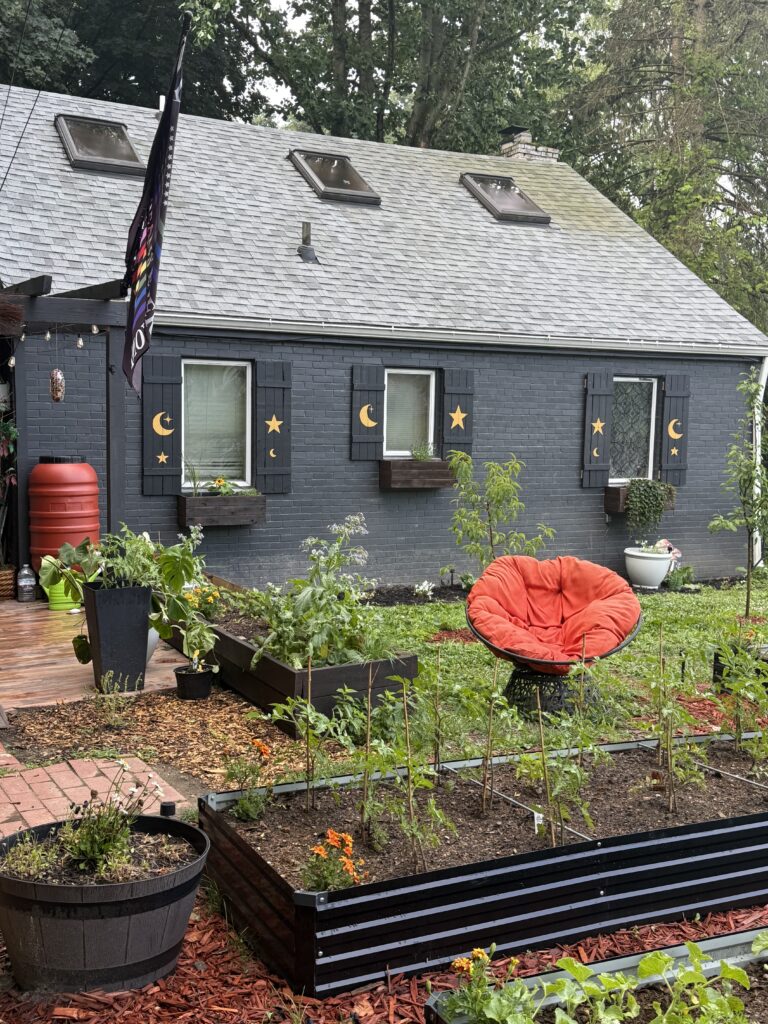
I’m not trying to turn the entire property into a perfectly designed native meadow. I’m building something much messier and, frankly, much more interesting to me.
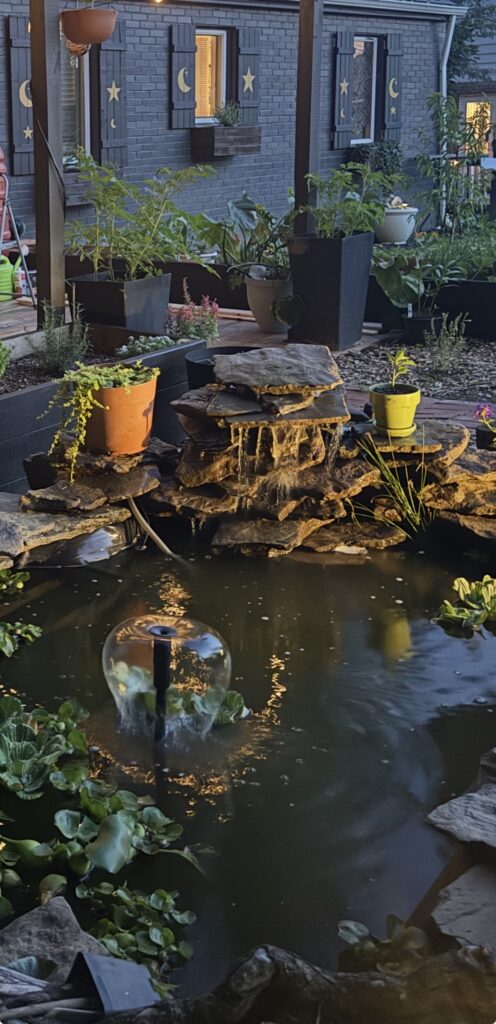
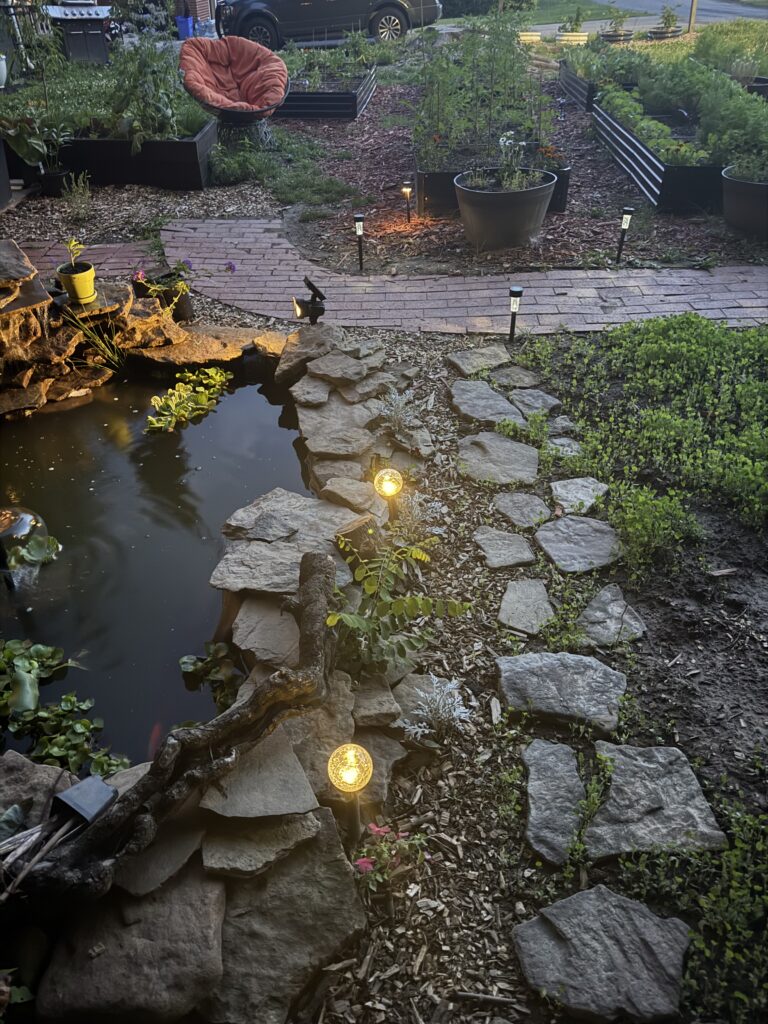
There are vegetable gardens and flower gardens. There are areas I’m intentionally planting for pollinators. There are paths and tended spaces. There are edges I’m letting grow. There are leaves that stay where they fall. There are plants I encourage and plants I remove.
I’m slowly replacing pieces of a traditional lawn with habitat.
And I’m learning as I go.
The goal isn’t neglect.
The goal is to stop treating every wild thing that appears as a problem requiring immediate removal.


The fall cleanup is the next thing to go..
Once I started thinking about the yard as habitat, the traditional fall cleanup starts looking suspicious too.
We are taught that a garden should go into winter tidy.
Cut everything down.
Rake every leaf.
Remove every dead stem.
Make it clean.
Except the garden isn’t actually empty when everything looks dead.
Native bees can nest in stems. Butterflies and moths can overwinter among leaves and plant material. Bumble bee queens can shelter close to the soil. Fireflies spend parts of their life cycle at ground level.
Suddenly all that mess looked less like mess and more like somebody’s home.
So now, the leaves stay.
The stems stay.
The weird brown things stay.
My fall garden will probably never win an award from an HOA.
Fortunately, I do not have one.


Spring is going to be the hardest part..
This may be the part that requires the most patience.
The first warm day of spring makes every gardener want to get outside and clean everything up.
I get it. After months of Western Pennsylvania being approximately seventeen different shades of gray, I too become unreasonably excited by 55 degrees and sunshine.
But a warm afternoon doesn’t necessarily mean everything overwintering in that garden is finished using it.
I’m learning to wait.
And I’m learning that there probably isn’t one magical date on the calendar when the entire property should suddenly be chopped, raked and cleared.
Different insects use different habitat.
Different plants wake at different times.
Different parts of the property can be managed differently.
The answer isn’t always finding the perfect cleanup weekend.
Maybe it’s getting comfortable with never cleaning everything at once.


The yard looks so different now..
It isn’t manicured.
That’s intentional.
There are still mowed areas. There will always be paths. I’ll still manage invasive plants and keep vegetation away from places where it causes actual problems.
But I don’t need every corner of this place to prove that humans are in charge.
I’d rather walk outside and see something moving.
A swallowtail on a flower.
A bumble bee disappearing into something I planted.
A bird pulling seeds from a plant I forgot to cut down.
Fireflies rising from the grass at dusk.
Those things have become part of what I’m building here too.
Maybe even the most important part.


Building the life I want to live in..
When I started saying I was “building the life I want to live in,” I mostly meant the obvious things.
Building the bookshelf bed.
Changing the rooms.
Growing the gardens.
Making ridiculous moons out of old trampolines because apparently that’s who I am now.
But I’m realizing that building this life isn’t only about what I add.
Sometimes it’s about what I stop removing.
A little less mowing.
A few more leaves.
Some dead stems that get to stay ugly for a while.
A corner of the yard where I decide that my opinion isn’t actually the most important one.
I’m not trying to create a perfect ecosystem. I don’t know enough to pretend that I am.
I’m just trying to make this little piece of land a better place to live.
For us.
And for everything that was already living here.
Turns out, building something starts by leaving it alone.
Entry No. 003 · September 2026
FIELD NOTES
Native Garden
What I’m doing: Reducing the amount of lawn we regularly mow and allowing selected areas to grow longer while slowly adding more native and pollinator-friendly plants. I’m keeping paths and usable lawn while treating the less-used parts of the property as habitat instead of turf that needs to stay short.
Why I leave some plants longer: Fireflies spend much of their lives at or near ground level, and their larvae depend on moist, relatively undisturbed habitat. Reducing mowing and maintaining areas of taller vegetation can help preserve that habitat.
Why the leaves stay: Fallen leaves aren’t just garden debris. They provide shelter and overwintering habitat for insects and other small wildlife. Where it’s practical, I leave whole leaves in garden beds and less-managed areas rather than removing all of them from the property.
Why I leave dead stems: Some native bees use hollow or pithy plant stems for nesting. Instead of cutting every perennial to the ground in fall, I leave stems standing through winter and into spring where I can.
Why I don’t clean everything up at once: There isn’t one universal spring date when every overwintering insect suddenly leaves the garden. I’m moving toward a gradual cleanup instead—leaving some habitat undisturbed while other areas begin growing again.
What I still manage: Wildlife-friendly doesn’t mean completely unmanaged. I still mow paths (using a manual push mower) and usable spaces, remove invasive plants, manage vegetation around structures, and intervene when something threatens the plants or habitat I’m trying to establish.
What I’m learning: The biggest shift hasn’t been learning how to grow something. It’s learning when not to interfere. The yard doesn’t need to be either a manicured lawn or an abandoned field. There is an enormous amount of space between the two. That’s the space I’m interested in.
A note from the field: These are observations from what I'm doing here in Western Pennsylvania, not universal instructions. I'm learning as I go, researching as I learn, and I'll update these notes when I inevitably discover a better way.

SOURCES

1. Xerces Society — Conserving the Jewels of the Night: Guidelines for Protecting Fireflies

This is the strongest source for our firefly section. Xerces specifically recommends mowing less often, allowing grass to grow higher, retaining leaf litter, and reducing ground disturbance. It also explains that larvae and egg-laying females spend substantial time on or near the ground.

2. Xerces Society — Leave the Leaves: Winter Habitat Protection

Perfect source for the fall/spring cleanup portions. It covers leaf litter, hollow stems, brush, soil habitat, overwintering butterflies and moths, bumble bee queens, and tunnel-nesting native bees. Xerces notes that about 30% of native bees are tunnel nesters.

3. Penn State Extension — Turfgrass Alternatives

I especially want this one because it's Pennsylvania-specific. Penn State discusses replacing conventional turf with habitat and specifically says one approach to creating meadow-like habitat is simply stopping mowing and allowing vegetation to develop, while also discussing intentionally planted native meadows.

4. Pennsylvania DCNR — Lawn to Habitat / Pocket Meadows

This gives us a Pennsylvania government source supporting the broader idea. DCNR actively encourages Pennsylvanians to replace portions of lawn with native habitat. Their Lawn to Habitat program describes benefits including pollinator and wildlife habitat, reduced mowing, improved stormwater absorption and improved soil/water outcomes.

5. Using Common Weeds to Create a Flowering Lawn for Pollinators — Penn State Extension